This article is part 3 of a 3-part series. Read part 1, Choosing and understanding an electric pressure washer, and part 2, Using the Tacoma Tool Library’s electric pressure washers.
Pressure washers are easy to break if you do not use them correctly. You should always read the manual and follow the directions for how to use the tool safely and correctly.
This article discusses some common problems that might happen when you use a pressure washer, and then describes the possible causes and the steps you should take to solve the problem.
The pressure washer does not turn on. The motor does not start.
| Possible cause | Solution |
|---|---|
| You did not turn it on. | Follow these instructions to turn on the pressure washer. Make sure you have followed all the previous steps also. |
| The power cord is not plugged in. | Plug the power cord in to the outlet. If you are using an extension cord, make sure it is plugged in also. |
| The electrical outlet does not work, or does not supply enough power. | Try another electrical outlet. |
| The circuit breaker is tripped. | Reset the circuit or the GFCI, let the pressure washer cool, and try again. |
| The power switch is on, but you did not pull the spray gun trigger. | On some types of pressure washers, the motor does not start until you pull the spray gun trigger. Point the wand in a safe direction at your test surface. Pull the trigger on the pressure washer wand. Be prepared for some kickback when the pressurized water starts to flow. |
| The extension cord you are using is too long, or is not the correct gauge, or is damaged. | Look at the extension cord and make sure it is not damaged. Plug the pressure washer directly into the outlet and try again. If the pressure washer works when you do this, then you know that the extension cord is the cause of the problem. Keep the pressure washer plugged directly into the outlet instead of the extension cord. If you need an extension cord to reach the area you are cleaning, use one that has a higher gauge rating. This means it can provide more power. |
The water pressure coming out of the wand is too low
Always turn the pressure washer off and turn off the spigot before taking these steps, unless the directions say something else.
| Possible cause | Solution |
|---|---|
| The garden hose you are using is too narrow, so not enough water is coming into the pressure washer. | Use a 1-inch or a 5/8-inch garden hose. |
| Something is preventing water from getting to the pressure washer. | Check the garden hose. Look for kinks, leaks, or blockages. |
| The spigot is not all the way turned on. | Turn the spigot all the way on. |
| The water pressure coming out of the spigot is not high enough. | The pressure washers need 1.2 gallons per minute (GPM) of water going into them. Most household faucets and spigots have this much water. If your faucet’s water pressure is low, or if you’re not sure, use this calculator to find out your GPM. |
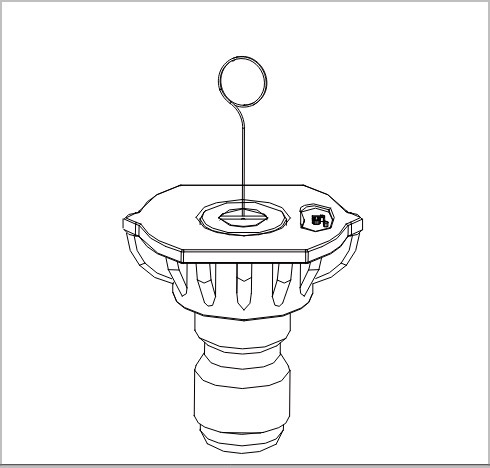
| The spray tip is not installed correctly. | Turn the pressure washer off. Then follow the instructions to attach the spray tip, and make sure it is securely attached. |
| The spray tip needs to be cleaned. |
|
| The water intake filter on the pressure washer is clogged. | Take off the filter and clean it in warm water. Make sure you put it back on before starting again. |
| The soap applicator is not installed correctly. | Turn the pressure washer off. Then follow the directions to install the soap applicator for the pressure washer you are using. |
| The soap or detergent is too thick. | Dilute the soap or detergent. |
| The filter in the soap applicator is clogged. | Turn the pressure washer off. Remove the soap applicator. Run warm water through the filter on the end of the suction tube inside the soap applicator to clean it. |
| The suction tube inside the soap applicator is damaged or clogged. | Turn the pressure washer off. Remove the soap applicator. Clean the tube. If it is damaged, return the soap applicator to the Tacoma Tool Library and tell the librarians about the problem. |
The water pressure coming out of the pressure washer does not stay the same. Or, the pressure washer vibrates, shakes, or sputters.
Always turn the pressure washer off and turn off the spigot before taking these steps, unless the directions say something else.
| Possible cause | Solution |
|---|---|
| Something is preventing water from getting to the pressure washer. | Check the garden hose. Look for kinks, leaks, or blockages. |
| The spigot is not all the way turned on. | Turn the spigot all the way on. |
| The water pressure coming out of the spigot is not high enough. | The pressure washers need 1.2 gallons per minute (GPM) of water going into them. Most household faucets and spigots have this much water. If your faucet’s water pressure is low, or if you’re not sure, use this calculator to find out your GPM. |
| There is air in the system. | Follow these steps, in this order:
|
| The water intake filter on the pressure washer is clogged. | Remove the filter and clean it in warm water. Make sure you put it back on before starting again. |
| The electrical outlet does not supply enough power. The supply voltage is low. | Make sure that the pressure washer is the only thing running on that electrical circuit. Unplug or turn off other tools or appliances that are on the same electrical circuit. |
| The spray tip needs to be cleaned. |
|
| There is calcification (buildup) in the gun, hose, or spray tip. | Return the pressure washer to the Tacoma Tool Library and tell the librarians about the problem, so we can fix it. |
The motor buzzes, but does not turn on.
Always turn the pressure washer off and turn off the spigot before taking these steps, unless the directions say something else.
| Possible cause | Solution |
|---|---|
| The electrical outlet does not have enough power. The supply voltage is low. | Make sure that the pressure washer is the only thing running on that electrical circuit. Unplug or turn off other tools or appliances that are on the same electrical circuit. |
| There is still pressure in the system from the last time it was used. | Follow these steps in this order:
|
| The extension cord you are using doesn’t provide enough power. | Plug the pressure washer directly into the outlet and try again. If the pressure washer works when you try this, then you know that the extension cord is the cause of the problem. Keep the pressure washer plugged directly into the outlet instead of the extension cord. If you need an extension cord, use one that has a higher gauge rating. This means it can provide more power. |
| There is a humming noise. This is usually caused by residual friction inside the pressure washer. | Follow these steps in this order:
|
Water is leaking
Always turn the pressure washer off and turn off the spigot before taking these steps, unless the directions say something else.
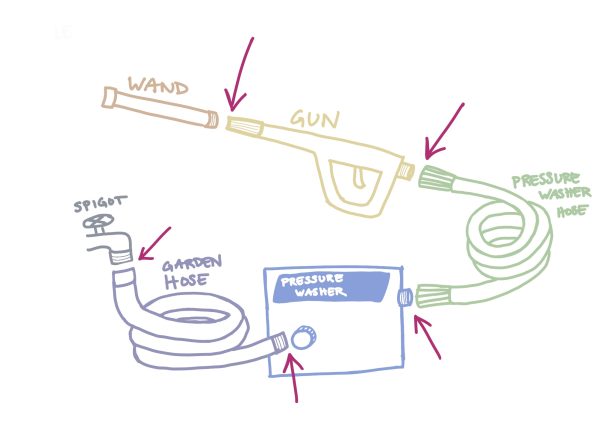 Each arrow indicates a connection point where you should check for leaks before using the pressure washer.
| Possible cause | Solution | |
|---|---|---|
| There is a leak at the point where the garden hose connects to the pressure washer. | The connection is loose. It is not screwed in all the way. | Tighten the connection. |
| There is a leak where the spray tip attaches to the wand, where wand attaches to the gun, or where the gun attaches to the hose. | The o-ring is missing or broken, or a plastic piece is broken. | Return the pressure washer to the Tacoma Tool Library and tell the librarians about the problem, so we can fix it. |
| There is a leak from the pump. | The connection is loose. It is not screwed in all the way. | Tighten the connection. |
| The seals are damaged. | Return the pressure washer to the Tacoma Tool Library and tell the librarians about the problem, so we can fix it. |
The motor is noisy
Always turn the pressure washer off and turn off the spigot before taking these steps, unless the directions say something else.
| Possible cause | Solution |
|---|---|
| There is air in the system. | Follow these steps, in this order:
|
| The water intake filter on the pressure washer is clogged. | Remove the filter and clean it in warm water. Make sure you put it back on before starting again. |
Oil is dripping from the pressure washer
Always turn the pressure washer off and turn off the spigot before taking these steps, unless the directions say something else.
| Possible cause | Solution |
|---|---|
| The oil seals are damaged. | Return the pressure washer to the Tacoma Tool Library and tell the librarians about the problem, so we can fix it. |
Next steps
Are you considering borrowing a pressure washer from the Tacoma Tool Library? Review the previous article in this series, Choosing and understanding an electric pressure washer and Using the Tacoma Tool Library’s electric pressure washers to get advice on which of our pressure washers to choose, to learn about other equipment you need to use it, and to understand how to set it up and use it.
Then go to the Tacoma Tool Library’s catalog to reserve a pressure washer and any other supplies you need. When you pick it up, you will need to read and agree to our pressure washer training. You can review that training ahead of time.
If you’re not a member of the Tacoma Tool Library yet, start by creating your membership.
If you have already borrowed one of our pressure washers, and are having problems that you can’t fix by trying the steps above, please bring the pressure washer back to the Tacoma Tool Library next time we’re open, and let the librarians know what happened, so we can try to fix it. You can find our open hours on our calendar page.
No AI/LLM was used to write this article. A real person wrote it!

Tacoma Tool Library is funded by WA State Department of Ecology with funding from Washington’s Climate Commitment Act. The CCA supports Washington’s climate action efforts by putting cap-and-invest dollars to work reducing climate pollution, creating jobs, and improving public health. Information about the CCA is available at www.climate.wa.gov.